

How to Plan Post Retirement Investment Without Taking Unnecessary Risk
If you are already retired or standing at the retirement gate, one thing becomes very clear—
you don’t want excitement, you want stability.
At this stage of life, post retirement investment planning is not about beating the market.
It is about sleeping peacefully, knowing your monthly expenses are taken care of and your capital is respected.
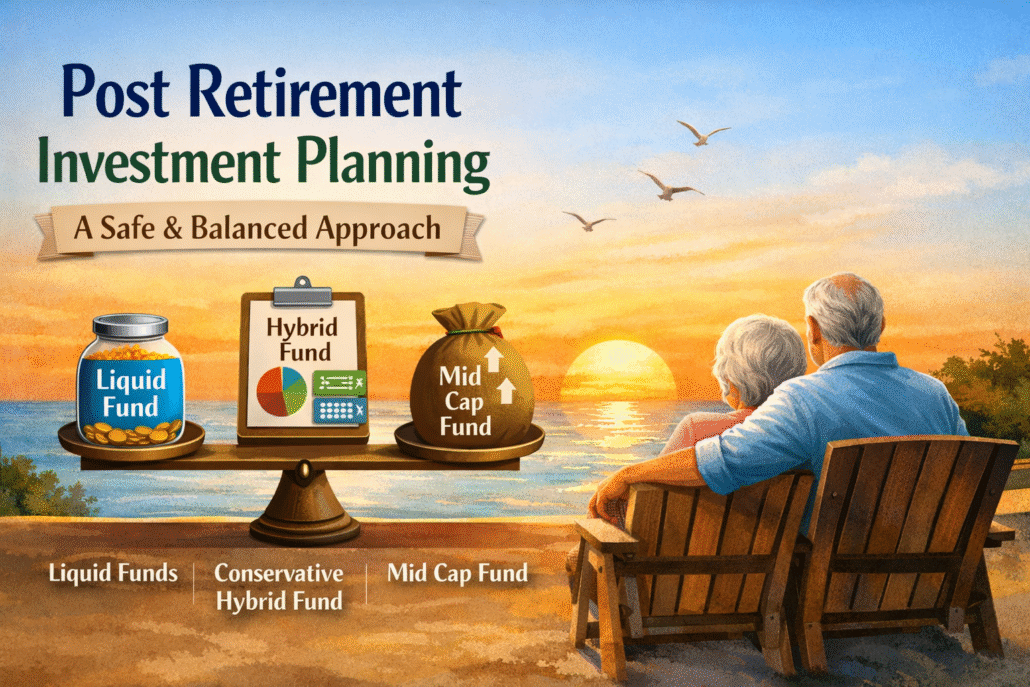
Let me share how I personally explain post retirement investment planning to readers like you—using mid cap funds carefully, conservative hybrid funds smartly, and liquid funds wisely.
Why Aggression Has No Place in Post Retirement Investment Planning
During working years, volatility is a friend.
After retirement, volatility becomes a silent stress creator.
That’s why post retirement investment planning should follow one golden rule:
“Income first, growth second, excitement never.”
This is where many retirees go wrong by either:
-
Staying fully in fixed deposits
-
Or chasing high-return equity stories
The balance lies somewhere in between.
The Three-Bucket Thinking Every Retiree Must Follow
In post retirement investment planning, I strongly believe in bucket strategy.
It simplifies decisions and reduces emotional mistakes.
Think of your money in three buckets:
-
Safety bucket
-
Stability bucket
-
Limited growth bucket
Let’s break them down.
Liquid Fund: The Safety Net of Retirement Life
Liquid funds form the foundation of post retirement investment planning.
This bucket is meant for:
-
Monthly expenses
-
Medical emergencies
-
One-year predictable needs
I suggest keeping 12–18 months of expenses in liquid funds.
Why liquid funds?
-
Better tax efficiency than savings accounts
-
Easy withdrawal
-
Very low volatility
This bucket ensures you never sell other investments in panic.
Conservative Hybrid Fund: The Peacekeeper of Your Portfolio
This is where post retirement investment planning becomes comfortable.
Conservative hybrid funds typically invest:
-
65–75% in debt
-
25–35% in equity
They offer:
-
Better returns than pure debt
-
Lower volatility than equity funds
-
Smoother experience during market corrections
For most retirees, 40–50% of total retirement corpus can stay here.
This bucket protects capital while quietly fighting inflation.
Where Does Mid Cap Fund Fit After Retirement?
Now comes the most misunderstood part of post retirement investment planning.
Many people think mid cap funds should be avoided completely after retirement.
I disagree—but with conditions.
Mid cap funds should be:
-
Limited in allocation
-
Used only for long-term inflation protection
-
Never used for regular income
A 10–15% allocation is more than enough.
This small exposure helps your money grow for:
-
Late retirement years
-
Legacy planning
-
Unexpected longevity
Think of mid cap as a controlled accelerator, not a racing engine.
Ideal Allocation Example for a Retired Investor
Here’s a simple illustration for post retirement investment planning:
-
30% – Liquid Fund (income + emergency)
-
45% – Conservative Hybrid Fund (stability + inflation control)
-
15% – Mid Cap Fund (limited growth)
-
10% – Cash / FD buffer (optional comfort)
No complexity. No overthinking.
SWP Strategy: Let the Money Come to You
Post retirement investment planning is incomplete without a Systematic Withdrawal Plan (SWP).
Instead of:
-
Breaking FDs every year
-
Timing market exits
SWP allows:
-
Monthly income
-
Tax-efficient withdrawals
-
Disciplined cash flow
Ideally:
-
Start SWP from liquid fund
-
Then conservative hybrid fund
-
Let mid cap fund remain untouched for long-term growth
This sequence reduces stress dramatically.
Common Mistakes Retirees Make (Please Avoid These)
In post retirement investment planning, mistakes hurt more because recovery time is limited.
Avoid:
-
Going all-in on equity after seeing one good year
-
Locking everything in long-term FDs ignoring inflation
-
Chasing dividend-paying funds blindly
-
Investing based on relatives’ advice
Your retirement needs personal strategy, not popular opinion.
How Often Should You Review Your Retirement Portfolio?
Another important part of post retirement investment planning is review frequency.
You don’t need monthly tracking.
You need:
-
Annual rebalancing
-
Expense adjustment check
-
Health and lifestyle review
Let the portfolio work quietly in the background.
Final Words From Me to You
Post retirement investment planning is not about maximizing returns.
It is about maximizing dignity, independence, and peace of mind.
A thoughtful mix of:
-
Liquid funds for safety
-
Conservative hybrid funds for stability
-
Limited mid cap exposure for growth
…creates a retirement life where money supports you, not scares you.
If your investments let you sleep well at night, you are doing it right.


Pingback: Conservative Hybrid Fund: Best Retirement Investment Option for People Aged 50 and Above - Cash Babu